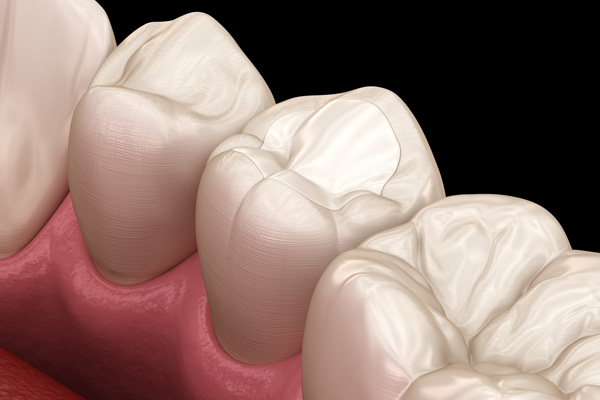
If you have experienced a cavity at least once, you almost certainly have had a dental filling. Composite fillings are made of resin and glass instead of metal. This variety of filling has become increasingly popular for its cosmetic benefits.
What is a composite filling?
Composite fillings, like other varieties of fillings, are often recommended by dentists after you suffer a cavity. These fillings, as the name suggests, fill the space caused by the cavity. A composite filling is a type of filling that has the advantage of looking virtually identical to real teeth. Other types of fillings such as gold and amalgam do not share this benefit. To make a composite filling, a plastic resin is reinforced with powdered glass. The precise shade of the filling can be customized to match the exact color of surrounding teeth.
Due to the higher cost and limited durability of composite fillings, they are typically used for front teeth for cosmetic reasons. Back teeth, which undergo the most stress with everyday use, may be better suited for metal fillings where the coloring is less noticeable. However, composite fillings can also be used for back teeth if you want a uniform color to your teeth.
All fillings have limited lifespans and will need to be replaced eventually. Secondary tooth decay, chewing, and clenching can all cause a filling to deteriorate over time. If left unchecked, the filling can crack or chip, which causes bacteria to be trapped between the filling and the tooth. This bacteria cannot be managed with regular brushing and flossing. If the bacteria get out of control, you may experience pain when chewing or extreme sensitivity to hot and cold.
Just like regular teeth, composite fillings require regular brushing and flossing in addition to regular dental checkups to last. Your dentist will check for problems with your filling each time you visit that only he or she can detect. In addition to checking for physical damage, your dentist will use X-rays to see if there is any decay underneath the filling.
How long do composite fillings last?
The general lifespan for a composite filling is around seven years. If the filling is well taken care of and the individual with the filling is not prone to cavities, it can sometimes last as long as 10 years. Compared to amalgam and gold fillings, which last about 20 years, composite fillings are not as durable and do not last as long. Your dentist will know when a filling needs to be replaced. To prevent symptoms of a decayed filling from happening, patients can have it replaced before the filling becomes damaged enough to cause pain or sensitivity.
Conclusion
After a cavity, you and your dentist will discuss what type of filling is recommended to replace the cavity. Composite fillings, while not as long-lasting as metal fillings, can be an attractive option, especially for front teeth.
Request an appointment or call Southern Cal Smiles: Susan Fredericks, D.D.S, M.P.H. at 818-657-8055 for an appointment in our Woodland Hills office.
Related Posts
Dental fillings protect oral health by repairing teeth compromised by cavities and decay, preventing further damage, and helping patients maintain comfortable, confident smiles. This essential treatment seals vulnerable areas, supports tooth structure, and stops bacteria from spreading deeper into tooth layers. By addressing cavities early and restoring compromised enamel, dental fillings preserve the longevity of…
If you are self-conscious about your smile because of a damaged or chipped tooth, you should know that a dentist can use dental fillings to quickly correct these minor flaws and restore your smile's appearance.Dental filling application is an in-office technique in which dentists use a tooth-colored resin substance to fix minor flaws in the…
Composite fillings are a common treatment for filling cavities and addressing tooth decay. These treatments often use tooth-colored, durable materials that can last for several years, but only if the filling is taken care of properly. It is important to avoid eating certain foods after getting a filling in order to protect the procedure and…