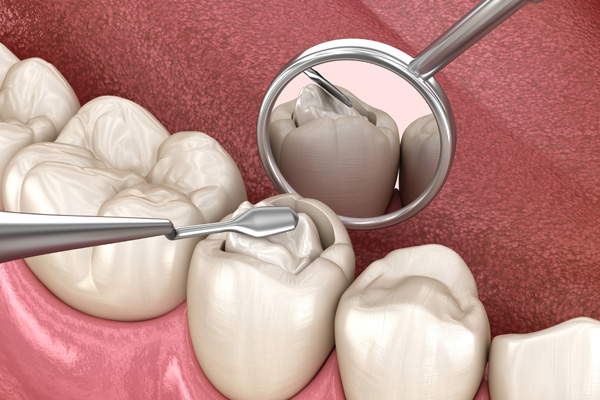
Tooth colored fillings are an important way that a patient can restore the functionality of the teeth while creating an aesthetically pleasing smile that leaves him or her happy with the dental work received. Composite fillings are becoming increasingly common, and it is important for patients to know whether the option may be right for them.
What are tooth colored fillings?
Composite resin fillings are the technical name for tooth colored fillings that are the same color as a patient's natural teeth. They can fill in small- to mid-size cavities and hold up well against the pressure of biting and chewing. Useful in both back and front teeth, composite fillings are common for those who want something that looks natural in the mouth.
How do composite fillings work?
Composite fillings, which are sometimes called resin-based composites, work by using special glue to bond them to the patient's remaining healthy tooth. Composite is also becoming increasingly popular over amalgam for filing in small cavities in the teeth.
What is the filling procedure?
Composite fillings may take a bit longer to place, but overall, the procedure for receiving them is very similar to receiving other types of fillings. First, the dentist looks at the patient's natural teeth to determine the right color match for the composite filling. Then, the cleaning process can begin. Sometimes, the bond will not be as effective on the natural teeth if they are not trimmed. This means that on occasion, the dentist will need to prepare the natural tooth for the filling by trimming parts of it. The trimming creates a strong base. The amount that needs to be trimmed is determined by how much decay there is.
After the natural tooth is prepared and any damage removed, the dentist will use a conditioner to complete the etching process. This process ensures that the surface of the tooth is able to bond well to the composite filling. Once applied, the bonding agent will need to harden to create a seal for completing the filling. The dentist usually shines a blue light known as a curing light onto the tooth for this process to happen. Once the initial bonding is complete, the dentist will add the composite in small layers, which helps to maintain a natural shape for the tooth. A light is used to cure the material between the application of each layer.
What are the advantages and disadvantages of composite fillings?
Like any dental procedure, composite resin fillings have advantages and disadvantages. On the plus side, composite fillings are quite durable and bond well to the natural tooth. In addition, because they are added in layers, they look more natural, match the other teeth more precisely, and provide an aesthetically pleasing look that many patients are proud to show off. On the downside, composite fillings are not suitable for people who have extensive dental damage and typically do not last as long as metal fillings. They also tend to be more expensive than metal due to the cosmetic nature of the filling.
Conclusion
If you think that tooth colored fillings may be the right match for your dental needs, talk to a dentist to learn more.
Request an appointment or call Southern Cal Smiles: Susan Fredericks, D.D.S, M.P.H. at 818-657-8055 for an appointment in our Woodland Hills office.
Related Posts
Dental fillings protect oral health by repairing teeth compromised by cavities and decay, preventing further damage, and helping patients maintain comfortable, confident smiles. This essential treatment seals vulnerable areas, supports tooth structure, and stops bacteria from spreading deeper into tooth layers. By addressing cavities early and restoring compromised enamel, dental fillings preserve the longevity of…
If you are self-conscious about your smile because of a damaged or chipped tooth, you should know that a dentist can use dental fillings to quickly correct these minor flaws and restore your smile's appearance.Dental filling application is an in-office technique in which dentists use a tooth-colored resin substance to fix minor flaws in the…
If you have experienced a cavity at least once, you almost certainly have had a dental filling. Composite fillings are made of resin and glass instead of metal. This variety of filling has become increasingly popular for its cosmetic benefits.Composite fillings, like other varieties of fillings, are often recommended by dentists after you suffer a…